
There’s more to all of us than what meets the eye
Identity and belonging in education have become increasingly important concerns for teachers, school leaders and researchers. Young people develop their understanding of themselves within families, communities, schools and wider society. Yet these influences do not always fit neatly together. Differences in culture, background, personal experience and social expectations can create tensions that affect how students understand themselves and relate to others.
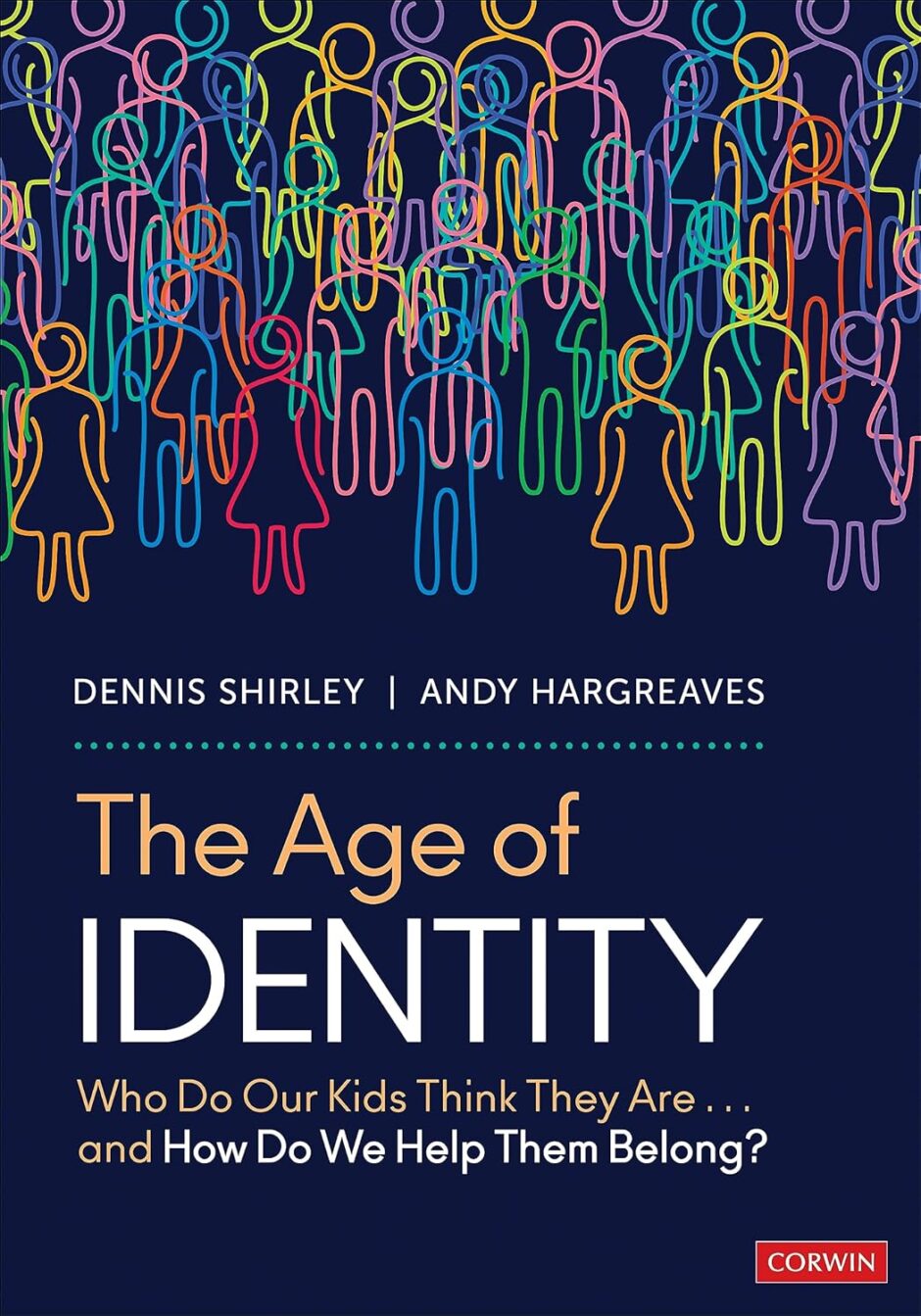
In The Age of Identity: Who Do Our Kids Think They Are… and How Do We Help Them Belong?, Dennis Shirley and Andy Hargreaves examine these questions and consider how educators can respond to the complexities of identity in contemporary society. Their central message is that schools should recognise the diversity of young people’s experiences while helping them develop a sense of belonging within a wider community.
The book addresses a difficult educational challenge. How can schools acknowledge individual differences without allowing those differences to become sources of exclusion or division?
Understanding identity and belonging in education
Identity is not a single, fixed characteristic. It develops through relationships, experiences and the social environments in which people participate. Students may understand themselves through their families, cultural backgrounds, friendships, interests and aspirations. These different aspects of identity can complement one another, but they can also create uncertainty or conflict.
Schools play an important role in this process because they bring together young people whose experiences and perspectives may differ considerably. For some students, school provides opportunities to develop confidence, establish friendships and discover new interests. Others may experience exclusion, misunderstanding or pressure to conceal aspects of who they are.
Shirley and Hargreaves encourage educators to consider identity in its fullness and complexity rather than reducing young people to particular categories or assumptions. Their approach draws on research and theories of identity while addressing the practical challenges that schools encounter. Belonging is closely connected to these questions. It involves more than simply being present within a school community. Students also need opportunities to participate, develop meaningful relationships and feel that others recognise and respect them.
Overcoming divisions through identity and belonging in education
Discussions about identity can become contentious, particularly when they involve competing social values, cultural expectations or political perspectives. Schools cannot entirely separate themselves from these wider debates. However, they have a responsibility to provide environments in which students can encounter differences without experiencing hostility or exclusion.
The book considers how educators might respond to these tensions constructively. Rather than treating identity solely as a source of disagreement, Shirley and Hargreaves explore its potential to support understanding and stronger relationships. This perspective also raises questions about educational leadership. School leaders influence how institutions respond to diversity, establish expectations for respectful behaviour and support teachers when difficult discussions arise. Their decisions can therefore affect whether students experience school as a community in which they belong.
Importantly, promoting belonging does not require everyone to share identical beliefs or experiences. It involves recognising differences while establishing the relationships and common expectations necessary for people to learn and work together.
What the book offers educators
The Age of Identity combines theoretical perspectives with examples and practical considerations for educational settings. Its discussion extends beyond individual students to examine how schools and professional communities respond to identity-related challenges.
The book includes:
- Examples of how schools address questions of identity, inclusion and belonging.
- Approaches to managing disagreements and controversies surrounding identity.
- Charts and illustrations intended to support reflection and professional discussion.
- Opportunities for educators to consider how the ideas relate to their own institutions and practices.
These elements make the book relevant not only to classroom teachers but also to school leaders and those involved in educational development.
The broader educational question concerns the relationship between individual recognition and collective responsibility. Schools must respond to the needs of particular students while maintaining a learning environment that supports everyone. Consequently, identity and belonging in education cannot be considered separately from institutional culture, professional judgement and the everyday relationships that shape school life.
About the authors
Dennis Shirley
Dennis Shirley is a professor of education at Boston College and an internationally recognised researcher whose work addresses educational change, professional development and school improvement. His research and consultancy have involved educators across numerous countries, giving him extensive experience of different educational systems and institutional contexts. He has also contributed to discussions about how schools can improve learning while maintaining respect for teachers’ professional knowledge and responsibilities. His work frequently considers the relationship between educational research, professional collaboration and meaningful institutional change.
Andy Hargreaves
Andy Hargreaves is an educational researcher whose work has influenced international discussions of school leadership, educational change and professional collaboration. He has held academic appointments at Boston College and the University of Ottawa and has advised educational organisations and policymakers internationally. He is also associated with the ARC Education Collaboratory, which supports collaboration and educational improvement across different systems. His research examines how teachers, school leaders and educational institutions respond to change, particularly through professional relationships, leadership and organisational culture.
Why identity and belonging in education matter for schools
The questions raised by Shirley and Hargreaves extend beyond the immediate controversies surrounding identity. They concern the conditions under which young people can develop confidence, participate in learning and establish constructive relationships with others.
For educators, this requires an awareness of how classroom interactions, institutional expectations and school culture influence students’ experiences. A commitment to belonging must therefore be reflected in everyday practice rather than confined to formal policies or statements of principle. Questions about how educational institutions reproduce or challenge existing inequalities also arise in Neil Selwyn’s research on digital schooling. The Age of Identity offers a perspective on these challenges by connecting individual identity with the wider responsibilities of educational communities. It invites teachers and school leaders to consider how schools can acknowledge differences while creating the conditions for shared learning and mutual understanding.
Ultimately, identity and belonging in education are not peripheral concerns. They are closely connected to how students experience school, how educators exercise professional judgement and how educational communities respond to the people within them.
Book information
Title: The Age of Identity: Who Do Our Kids Think They Are… and How Do We Help Them Belong?
Authors: Dennis Shirley and Andy Hargreaves
Publisher: Corwin, first edition
Publication date: 30 November 2023
ISBN-13: 978-1071913130
Authors on LinkedIn: Dennis Shirley and Andy Hargreaves
Purchase: The Age of Identity on Amazon
#TheAgeOfIdentity #IdentityAndBelonging #Education #InclusiveEducation #EducationalLeadership #SchoolCulture #StudentBelonging #EducationalResearch #DennisShirley #AndyHargreaves