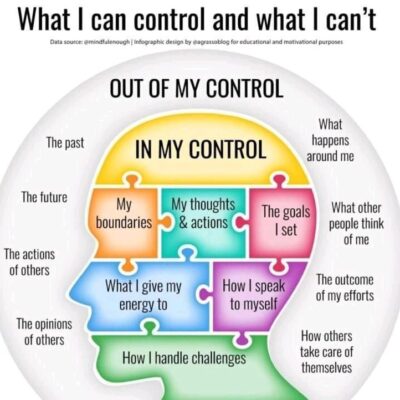

Our emotional energy zones are rarely static. Energy rises and falls throughout the day, influenced by work, relationships, pressure, rest, expectations and countless smaller experiences. At times, we feel enthusiastic and ready to act. At others, we may be calm and reflective, frustrated and restless, or simply exhausted.
Thinking in terms of emotional energy zones can provide a useful framework for recognising these changes. The purpose is not to divide emotions neatly into “good” and “bad” categories. Human emotions are considerably more complex than that. Instead, the idea encourages us to notice both the emotional quality of an experience and the amount of energy associated with it. This distinction matters. High energy is not automatically positive. Excitement may be energising, but anxiety and agitation can also produce highly activated states. Equally, low energy is not necessarily negative. Exhaustion can leave us depleted, while calmness and contentment may involve relatively low levels of activation.
Understanding where we are emotionally can therefore help us decide what we need next. Sometimes that means maintaining momentum. Sometimes it means slowing down. At other times, it means recognising that we have been operating under pressure for too long and need genuine recovery.
Understanding emotional energy zones
Emotional energy can be thought of as having more than one dimension. One concerns whether an emotional experience feels broadly positive or negative. Another concerns its level of activation or energy. This creates a more useful picture than a simple line running from “positive” to “negative”.
A person might experience:
- High energy and positive emotion, such as enthusiasm, excitement, confidence or determination.
- High energy and negative emotion, such as anxiety, anger, frustration or agitation.
- Low energy and positive emotion, such as calmness, contentment, relaxation or quiet satisfaction.
- Low energy and negative emotion, such as exhaustion, discouragement, detachment or emotional depletion.
None of these zones should automatically be regarded as permanent states or diagnoses. They describe experiences that can change rapidly according to circumstances. Even emotions that feel unpleasant can serve a purpose. Frustration may alert us that something needs to change. Anxiety can draw attention to perceived risk. Tiredness may signal a need for rest. The problem often lies not in experiencing these emotions but in remaining in demanding states for prolonged periods without sufficient opportunity to recover.
The aim, therefore, is not permanent positivity. It is greater awareness of our emotional state and a better understanding of how to respond to it.
Recognising your emotional energy
Self-awareness is the starting point for managing emotional energy.
This sounds straightforward, yet it can be surprisingly difficult. When work is busy or life becomes demanding, we can move from one obligation to another without noticing how our internal state is changing. By the time we recognise exhaustion, irritability or emotional depletion, we may have been experiencing it for some time.
Several signals can help us identify our current emotional energy zone. Mood provides one indication, but physical sensations and patterns of thought can be equally revealing. Perhaps concentration has become more difficult. Small interruptions suddenly feel disproportionately irritating. Tasks that normally seem manageable require unusual effort. Alternatively, we may notice that we feel energised, curious and eager to begin something new. The body can offer signals too. Tension, restlessness, fatigue and difficulty settling can all accompany changes in emotional state. The important point is not to scrutinise every feeling. Constantly monitoring ourselves can become counterproductive. Instead, occasional reflection can help us notice patterns that might otherwise remain invisible.
A useful question might simply be:
Where is my energy right now, and what is influencing it?
The answer may tell us more than asking whether we are merely feeling “good” or “bad”.
How emotional energy affects daily life
Our emotional energy zones inevitably influence how we experience the demands of everyday life. When we feel engaged and appropriately energised, difficult tasks can appear more manageable. Concentration may come more readily, conversations can feel easier and we may approach problems with greater curiosity. A positive emotional state can support motivation and make sustained effort feel less burdensome.
Yet more energy is not always better.
A highly activated state can become uncomfortable when enthusiasm turns into pressure or alertness becomes anxiety. Someone may appear exceptionally productive while operating under considerable internal strain. In the short term, urgency can drive performance. Sustaining that level of activation indefinitely is another matter.
Emotional energy and relationships
Relationships are particularly sensitive to our emotional state. When we have sufficient emotional capacity, listening carefully and responding patiently can be easier. Under sustained pressure, the same conversation may feel considerably more demanding. This does not mean that negative emotions inevitably produce poor communication. Rather, awareness gives us a better opportunity to recognise when our reactions may reflect our own depleted state as much as the behaviour of the person in front of us. The same principle applies professionally. A leader, teacher or colleague who understands their own emotional state may be better positioned to recognise when frustration is beginning to influence a conversation or decision. Emotional awareness therefore has a relational dimension. Our emotional energy is personal, but its effects rarely remain entirely private.
Strategies for managing emotional energy
Managing our emotional energy zones does not mean trying to control every emotion or maintain a permanently positive mindset. A more realistic aim is regulation: recognising what we are experiencing, understanding what may be contributing to it and responding appropriately. Different situations require different strategies.
Mindfulness can help some people create a small amount of distance between an emotional response and the action that follows it. This need not involve lengthy meditation. A brief pause, deliberate breathing or simply noticing an emotion before reacting can sometimes be enough to interrupt an automatic response.
Gratitude can provide another perspective. Deliberately noticing positive experiences does not require ignoring difficulties. It simply prevents those difficulties from becoming the only things receiving our attention.
Physical movement can also provide a useful transition. A walk, exercise or even leaving a desk briefly may help create separation between demanding activities.
There is no universal recovery strategy. Reading may restore one person while social interaction restores another. Someone else may need silence, exercise, music, time outdoors or simply an evening in which nothing further is expected of them. The relevant question is not:
What should relaxation look like?
It is:
What actually helps me recover?
Boundaries protect emotional capacity
Boundaries are particularly important because emotional energy is finite.
Work can expand remarkably easily into whatever space is available to it. Email, messaging platforms and mobile devices have made professional communication possible almost everywhere. Technological convenience can consequently make psychological separation considerably harder. A boundary might involve deciding when work communication stops for the day, protecting particular periods for family or leisure, or recognising that not every request requires an immediate response. Learning to say “no” can also be part of emotional energy management. So can delegating, asking for help and accepting that completing everything is sometimes impossible. Boundaries are not evidence of insufficient commitment. Used appropriately, they can protect the capacity required to remain committed over time.
Creating a positive emotional environment
Emotional energy does not exist solely within individuals. Environments influence it. The people around us matter. Supportive relationships can provide perspective, encouragement and a sense of connection. Difficult relationships, persistent conflict or environments in which people feel unable to speak openly can consume considerable emotional capacity. This makes emotional energy relevant to workplaces as well as private life.
Leaders influence the emotional environment partly through everyday behaviour. How they respond to mistakes, acknowledge contributions, communicate uncertainty and listen to concerns can affect whether people experience the workplace as supportive or threatening. Team members contribute too. Respect, reliability, active listening and small acts of consideration can influence the atmosphere of a group without requiring formal programmes or initiatives.
Positive does not mean permanently cheerful
A positive emotional environment should not be confused with one in which negative emotions are unwelcome. People become frustrated. Projects fail. Disagreements occur. Workloads become difficult and sometimes circumstances genuinely are unpleasant.
Insisting on positivity in such situations can prevent honest communication rather than improve well-being. A healthier environment allows people to acknowledge difficulties without becoming defined by them. Concerns can be raised, disagreement can occur respectfully and support can be requested without automatically being interpreted as weakness.
The objective is not constant happiness. It is creating conditions in which people can experience a realistic range of emotions while retaining sufficient psychological and relational resources to respond constructively.
From pressure and performance to burnout
Periods of intense pressure are sometimes unavoidable. Deadlines approach, unexpected problems arise and circumstances require more effort than usual. The human stress response can help us meet short-term demands. Increased alertness and energy may enable us to concentrate intensely and respond quickly when circumstances require it. Problems arise when exceptional effort becomes the normal state. Recognising sustained pressure early can also help us develop more effective stress management strategies before exhaustion becomes the norm. Recovery cannot continually be postponed without consequences. Someone who repeatedly moves from one high-pressure period into another may gradually find that the strategies that once helped them perform are becoming less effective.
Signs of sustained depletion can include:
- persistent exhaustion
- difficulty concentrating
- increasing cynicism or detachment
- reduced motivation
- irritability
- changes in sleep
- a declining sense of effectiveness
These signs should not be treated as a checklist for self-diagnosis. They are signals that something may need attention. This is also where the language of emotional energy requires caution. Burnout is more than simply being in a “low-energy zone”. Reducing it to an individual energy-management problem risks overlooking the circumstances producing the strain. An unreasonable workload cannot always be solved through mindfulness. Persistent organisational dysfunction cannot be corrected by keeping a gratitude journal. Sometimes the individual needs to recover. At other times, the environment itself needs to change. Recognising that distinction is crucial.
The role of recovery in emotional well-being
Recovery is not merely what happens after everything important has been completed. It is part of what allows us to continue doing important things. Yet recovery can be surprisingly difficult to prioritise. Rest often competes with responsibilities that appear more urgent. When time is limited, activities that do not produce an obvious outcome can seem expendable.
That can be a mistake.
Recovery can take many forms. Sleep is fundamental, but recovery also includes activities that create psychological distance from demands. Hobbies, social interaction, exercise, reading, music, creative activity or time outdoors may all provide opportunities to shift attention and restore capacity.
For some people, solitude is restorative. Others recover through connection. The important feature is not the activity itself but whether it genuinely changes our relationship with the demands that have consumed our energy.
Recovery should not become another performance target
There is a paradox worth recognising here. Once well-being becomes something to optimise, recovery itself can turn into another obligation. We can begin measuring sleep, scheduling mindfulness, counting exercise, tracking habits and attempting to perform relaxation correctly. At that point, recovery risks becoming another project. Not every restorative activity needs a measurable outcome. Sometimes an evening spent reading, walking, talking to somebody or simply doing very little is valuable precisely because it is not productive. Rest does not always need to earn its place.
Emotional energy as a tool for reflection
The value of emotional energy zones lies less in assigning ourselves a label and more in providing a language for reflection. Emotions fluctuate. Energy fluctuates. Neither should automatically be interpreted as evidence that something is wrong.
What matters is recognising patterns.
If high-pressure states repeatedly dominate the working week, that deserves attention. When exhaustion persists despite rest, it may signal that ordinary recovery is insufficient. If particular relationships consistently leave us depleted, understanding that pattern can inform how we approach them. Equally, noticing what restores energy can be useful. Certain activities, people or environments may repeatedly leave us calmer, more focused or more capable of engaging with what comes next. Self-awareness gives us information. What we do with that information is the more important question.
Conclusion
Understanding emotional energy zones offers a useful way of thinking about the changing relationship between emotion, activation, performance and recovery. The framework becomes most useful when we resist turning it into a simple distinction between positive and negative states. High energy can accompany enthusiasm, but it can also accompany anxiety and frustration. Low energy can reflect exhaustion, but it can equally describe calmness and contentment.
The goal is therefore not to remain permanently energised or positive.
It is to recognise where we are, understand what may have brought us there and respond with greater awareness. Sometimes that response involves maintaining momentum. At other times, we need boundaries, support, a change of environment or genuine rest. Sustained pressure may require more than an individual coping strategy, particularly when the source of the problem lies in workload, relationships or organisational conditions.
Recovery is equally important. It should not be regarded as the reward for completing everything else, but as part of the process that allows us to function sustainably. Perhaps the most useful question is consequently not:
How can I stay in a positive emotional energy zone?
but:
What is my emotional energy telling me, and what do I need to do with that information?
That question leaves room for something a simplistic positive-versus-negative model cannot: the complexity of being human.
#EmotionalEnergy #EmotionalEnergyZones #WellBeing #SelfAwareness #Resilience #Mindfulness #Burnout #Recovery #WorkLifeBalance #Reflection
Acknowledgements
Infographic source (Instagram): @thepresentpsychologist