
Why emotional agility matters in life, leadership and professional development
In the intricate fabric of human experience, emotional agility emerges as a thread that weaves through a fulfilling life. It is more than a concept. It acts as a compass through the labyrinth of emotions. Along the way, authenticity, empathy and values can align harmoniously.
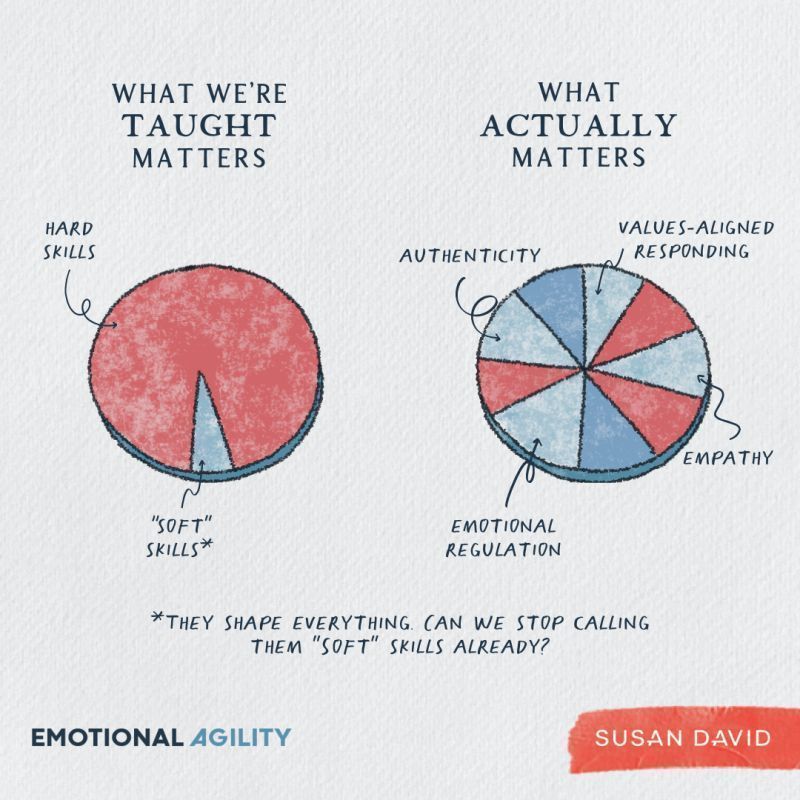
Susan David, Ph.D., a psychologist at Harvard Medical School, explores this concept through a revealing diagram. It contrasts “What we are taught matters” with “What actually matters.” This visual representation offers a compelling roadmap for personal and professional development.
The infographic contrasts conventional teachings with deeper human qualities. Conventional approaches often distinguish between “Hard Skills” and “Soft Skills”. In contrast, David highlights authenticity, values-aligned responding, empathy and emotional regulation.
Looking beyond hard skills
Education systems and societal norms often emphasise what they traditionally perceive as valuable. These “Hard Skills” include technical proficiency, knowledge and expertise.
However, the infographic presents another perspective. The less tangible qualities commonly described as “Soft Skills” can profoundly influence how we live, work and interact with others.
Soft skills shape everything. Can we stop calling them “soft” skills already?
The term “Soft Skills” itself warrants scrutiny. The infographic challenges the idea that these skills are secondary or less important. In the context of emotional agility, these qualities play a pivotal role. They help us navigate the complexities of human emotions and relationships.
Emotional agility as a different way of responding
Emotional agility involves treating emotions as sources of information rather than simply as obstacles to overcome. It requires us to step back and reflect. We can then respond in ways that align with our values and goals instead of relying on impulsive reactions.
This approach can transform the way we engage with the world. In particular, it can foster authenticity and emotional regulation.
To explore emotional agility further, consider the four components highlighted under “What actually matters” in the infographic.
- Authenticity: Living authentically means being true to oneself, embracing vulnerability and expressing genuine emotions. It is a cornerstone of emotional agility. As a result, individuals can navigate life with greater honesty and integrity.
- Values-aligned responding: Aligning responses with core values helps ensure that our actions reflect our principles. In turn, this can foster a sense of purpose. It can also establish a foundation for meaningful interactions and decisions.
- Empathy: Understanding and sharing the feelings of others forms an important aspect of emotional intelligence. Empathy can bridge gaps and nurture relationships. Moreover, it can contribute to a more compassionate and interconnected society.
- Emotional regulation: Developing emotional regulation helps us respond thoughtfully to situations instead of being driven by fleeting emotions. Consequently, it can support considered decision-making and more constructive responses to challenging situations.
What actually matters?
The contrast between these elements and conventional teaching invites us to reconsider our priorities. This applies to both personal and professional development.
Hard Skills undoubtedly have their place. However, a fulfilling life also depends on emotional agility and the qualities traditionally categorised as “Soft Skills”.
Now, turning the lens towards you, esteemed reader, what are your thoughts on the matter? From your perspective, what actually matters when it comes to living a fulfilling life?
Feel free to share your insights in the comments below. Your perspective adds another layer to the rich tapestry of this ongoing conversation.
Emotional agility in leadership and professional development
The relevance of emotional agility becomes even more pronounced in leadership development, executive coaching, life coaching and entrepreneurship. Leaders regularly face uncertainty, interpersonal relationships and competing demands. At the same time, they need to consider how their responses affect others.
Consequently, empathy, authenticity and values-aligned behaviour matter beyond personal development. They can also shape professional relationships and leadership.
Beyond conventional definitions of success
As we collectively strive for personal and societal growth, we can consider the wisdom embedded in the diagram. What actually matters extends beyond the confines of conventional teaching.
Authenticity, values-aligned responding, empathy and emotional regulation can work together. In doing so, they can help us move towards a more considered and fulfilling life.
Ultimately, emotional agility invites us to recognise the importance of qualities too easily dismissed as “Soft Skills”.
So, here’s to embracing emotional agility and reconsidering the skills that shape the narrative of our lives.
#EmotionalAgility #AuthenticLiving #ValuesAlignment #EmpathyMatters #SoftSkills #LeadershipDevelopment #ProfessionalDevelopment #EmotionalIntelligence #PersonalGrowth #FulfillingLife
Acknowledgements
The artwork accompanying this piece is credited to Susan David, whose work on emotional agility provides the inspiration for this discussion.